





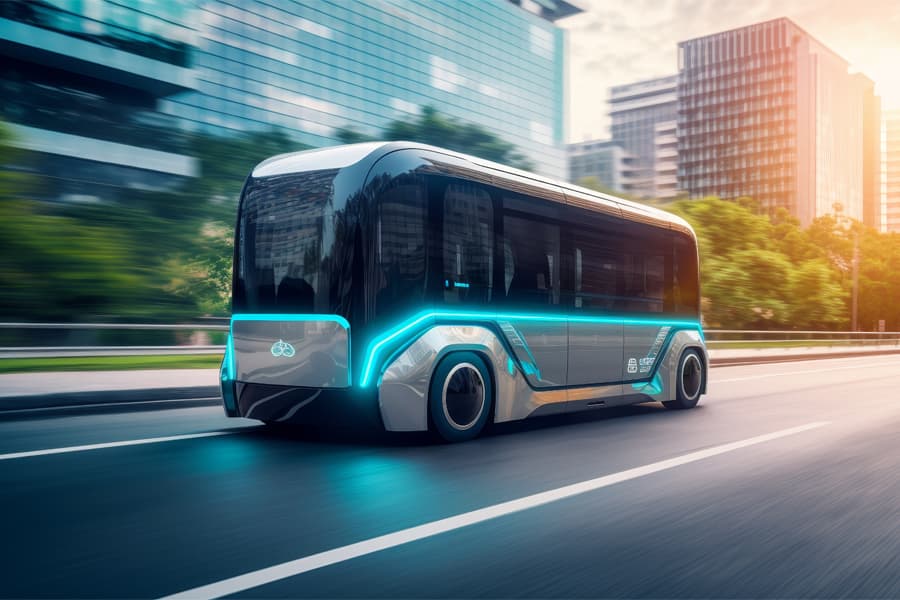
With autonomous vehicles now a reality, we look at the latest legal developments in Japan and Thailand governing safety, liability and control
Latest legal trends in Japan on automated vehicles
In Japan, the private and the public sectors are seeking to implement self-driving services. Several companies have been announcing plans to offer self-driving services, and the Japanese government aims to introduce such services in about 50 locations in the country by March 2026.

Partner
Mori Hamada
& Matsumoto
Tokyo
Tel: +81 3 6266 8717
Email: norihito.sato@mhm-global.com
In Japan, where the population is declining, maintaining and strengthening mobility services, especially in rural areas, is seen as urgent. The government is discussing the commercialisation of technologies that support regional mobility services such as self-driving buses. To smoothly introduce those services, it is also important to clarify the applicability and interpretation of laws and regulations regarding automated vehicles, such as civil and criminal liabilities in accidents, and to improve the predictability of legal risks. The government is discussing those legal issues at various bodies such as the Sub-Working Group on the Examination of Social Rules Concerning Automated Vehicles within the AI Era, Digital Agency (SWG), of which an author of this article, Norihito Sato, is a member.
This article discusses the status and recent discussions regarding the legal systems related to automated vehicles in Japan.
Current laws and regulations
The laws and regulations on automated vehicles include: (1) traffic rules such as the Road Traffic Act; (2) those on the safety of vehicles, including the Road Transport Vehicles Act and the Safety Standards for Road Transport Vehicles (Safety Standards); (3) laws on civil liability in accidents, including the Automobile Liability Security Act and the Product Liability Act, and general laws such as the Civil Code; and (4) laws on criminal liability, including the Penal Code and its special law, the Act on Punishment of Acts Inflicting Death or Injury on Others by Driving a Motor Vehicle, etc.
In addition, when certain data such as in-vehicle data, which falls within the definition of personal information under the Act on the Protection of Personal Information, are obtained or used in connection with the operation of automated vehicles, the service provider obtaining or using such data should comply with that law.
This section provides an overview of the major current laws and regulations on automated vehicles in Japan.
Road Traffic Act

Senior associate
Mori Hamada
& Matsumoto
Tokyo
Tel: +81 3 6266 8942
Email: yusuke.iino@mhm-global.com
In Japan, the Road Traffic Act provides for traffic rules, such as maximum speed limits, driving at reduced speeds and coming to a stop, and drivers’ responsibilities such as a prohibition on driving under the influence of alcohol.
The 2019 amendment to the Road Traffic Act added provisions regarding the obligations of drivers using automated driving systems and the need for data recorders for the operating status of automated driving systems. Together with the amendment to the Road Transport Vehicle Act, the Road Traffic Act established provisions for level 3 automated vehicles, which can be deployed on public roads.
In addition, the 2022 amendment to the Road Traffic Act introduced a permit mechanism for a specified automated driving, which is equivalent to level 4 automated driving without a human driver. The service provider must obtain the permission of the relevant local public safety commission. This permit mechanism applies only to transport services such as buses, taxis and trucks monitored remotely.
Road Transport Vehicle Act and safety standards
The Road Transport Vehicle Act stipulates the safety standards, which are technical standards for safety, pollution prevention and other environmental preservation. For example, the standards specify how to measure fuel consumption. Only vehicles that conform to the safety standards may be operated on public roads.
The 2019 revision of the Road Transport Vehicle Act subjected automated driving systems equivalent to level 3 or higher to the safety standards. In addition, a system was established to grant operational design domain (ODD) if the Ministry of Land, Infrastructure, Transport and Tourism (MLIT) determines that the performance of automated driving systems under certain conditions meets the safety standards.
At the same time, the safety standards for automated driving systems were also established. For example, automated driving systems must not interfere with the safety of other traffic while in operation, and must ensure the safety of occupants.
In September 2018, before the 2019 revision, the MLIT established guidelines for safety requirements that level 3 and 4 automated vehicles must meet, to promote the development and commercialisation of safe automated vehicles. In the guidelines, one vehicle safety requirement states that “automated vehicles must prevent reasonably foreseeable and preventable accidents involving bodily injury in the operational design domain (ODD) of automated vehicles.”
Road Transportation Act, Act on Motor Vehicle Cargo
Regarding the Road Transportation Act and the Act on Motor Vehicle Cargo Transportation Services, which regulate the business of transporting passengers and freight, the relevant ministerial ordinances were amended in 2023. The amendment newly stipulated measures to ensure transportation safety and the procedures to be taken when carriers conduct business using automated vehicles. Specifically, carriers are required at all times to have automated-driving-safety personnel, who are responsible for ensuring the safety of operation of automated vehicles but are not responsible for always monitoring the surroundings of the vehicles as these personnel are not drivers.
Civil liability
The Automobile Liability Security Act provides for special provisions against general tort liability under the Civil Code with respect to traffic accidents involving automobiles. Under the Civil Code, the victim (claimant) must allege and prove the negligence of the offender (obligor).
In contrast, under the act, vehicle owners will be liable for bodily injuries of third parties unless they prove that they are exempt from liability, such as:
(1) no fault of the owners and drivers; and (2) non-defect of the vehicles.
Such liability is covered by the mandatory insurance of owners up to a certain amount, and if the accident is caused by a defect in the car, the owner will be liable, and the insurance company will pay the victim’s insurance claim. In turn, the insurance company will claim compensation from the manufacturer.
In 2018, the MLIT published a report discussing how civil liability, including liability based on the act, is applied in the case of automated-vehicle accidents. The report concluded that civil liability under the act should be maintained to achieve prompt victim relief and stable operation of the existing insurance system. On the other hand, since it is practically difficult for insurance companies that have paid insurance to seek compensation from automobile manufacturers for damages caused by automobile defects, it is necessary to consider a mechanism that allows insurance companies to effectively seek such compensation.
Under the Product Liability Act, victims (claimants) can claim damages even without proving the manufacturer’s negligence if they allege and prove the existence of a defect in the product. However, “product” does not include software, and product liability under this law does not apply to a defect in the software itself. In addition, whether a defect exists is determined at the time of the delivery of the product, even if the software is updated several years after delivery. These points should be legally addressed for the law to effectively benefit the victims.
Criminal liability
Japan has a special statute that punishes automobile accidents more severely than negligent homicide or unintentional injury under the Penal Code. There is no precedent regarding whether the special statute, negligent homicide or unintentional injury under the Penal Code applies in the case of automated vehicles.
The special statute generally assumes that human drivers have obligations and, thus, is unlikely to apply to automated vehicles. As it is not clear how negligent homicide or unintentional injury under the Penal Code applies, the Japanese government is discussing how the predictability of criminal liability can be improved.
Outlook
The Japanese government established the SWG, the digital agency, to discuss legal issues including legal liability in the event of accidents, and discussions are underway. The SWG is discussing short and long-term issues, and the direction that should be taken from the perspectives of: (1) ensuring full redress for victims; and (2) promoting responsible operation of automated vehicles using advanced technologies, with the aim of reaching a consensus by around May 2024.
Accident-investigation and data-sharing mechanisms are also being discussed in the SWG to promote social acceptance of automated vehicles. In the mid to long term, the discussion may lead to legal liability not only in relation to automated vehicles, but also in relation to AI technology in general. The conclusions of the SWG will be considered important as they will indicate the future direction of laws and regulations related to automated vehicles in Japan.

MORI HAMADA & MATSUMOTO
16th Floor, Marunouchi Park Building
2-6-1 Marunouchi, Chiyoda-ku
Tokyo 100-8222, Japan
Tel: +81 3 6212 8330
Email: mhm_info@mhm-global.com
Thailand’s accelerating AV regulatory landscape
In an era of rapid technological advancements, autonomous systems are becoming increasingly prevalent across various domains. In Thailand, the use of automated driving or self-driving vehicles has also emerged in recent years. The evolution of ADAS (Advanced Driver Assistance Systems) has led to a rise in the number of use cases involving level 2+ autonomous vehicles (AVs), also known as “hands-off” vehicles, on national roads. Additionally, there have been instances of fully automated vehicles used to unload cargo at certain locations such as ports.

Partner
Baker McKenzie
Bangkok
Tel: +66 2 666 2824 (ext. 4112)
Email: suriyong.tungsuwan@bakermckenzie.com
Amid the development of policies and legislation to keep pace with the rapidly evolving technological trends of autonomous driving systems in the US and many European countries, Thailand, in comparison, is still in its infancy stage regarding the local legal framework to regulate AVs. However, there are signs of policymakers in relevant sectors becoming more active in considering the adoption of well-established regulatory concepts in this area.
The necessity to regulate AVs mainly revolves around safety and consumer protection. This article discusses the current state of the regulatory framework for the main enablers that make autonomous driving possible, consisting of two crucial elements: hardware and software. For hardware, sensor devices and equipment used in AVs to identify other vehicles, road signs, traffic signals or obstacles for hazard analysis, such as light detection and ranging “LiDAR” and millimeter-wave radar, which are considered radio equipment, are regulated under the relevant notifications issued by the National Broadcasting and Telecommunications Commission (NBTC).
These notifications establish technical standards of radio equipment and criteria for permission to use radar system radio equipment for vehicles, requiring, among others, that the technical standards of such equipment as prescribed by the NBTC must be met. To manufacture or import the radio equipment, including those already equipped in vehicles, a separate licence for each purpose must be obtained from the NBTC. The NBTC notifications are generally reviewed and updated from time to time to keep pace with fast-developing specifications of sensor technologies.

Partner
Baker McKenzie
Bangkok
Tel: +66 2 666 2824 (ext. 4051)
Email: bulin.sanooj@bakermckenzie.com
Although there is no specific standard that applies to AV driving systems under Thai law at present, in early 2024 an AV-related industrial product standard was issued under the Industrial Products Standards Act (1968). This latest notification of the Ministry of Industry establishes fundamental standards on the role and functional model of low-speed automated driving system (LSADS) services for intelligent transport systems and infrastructure facilities to support driving in urban and countryside areas.
It covers topics such as automated driving system classification, infrastructure support for LSADS services, and concept of operations. The standard covers only services using LSADS-equipped vehicles, including platforms for driving monitoring, emergency response, operation management, and other platforms for supporting automated driving systems, and does not include in-vehicle control systems.
While the standard is not mandatory, its introduction can be seen as another step closer to the adoption of the AV-related standards under Thai law. It may also be possible that the early adoption of AVs in Thailand would begin with low-speed AVs, contributing to a new mode of public transportation of goods and people.
For software, autonomous driving systems generally run on specific task artificial intelligence (AI) systems, which process signal inputs from numerous sensors and control the AV’s driving systems.
The AI regime in Thailand is in its early stages, with a few draft legislations being introduced in 2022. It is noteworthy that AI for AVs may be categorised as a high-risk type AI, which may be subject to certain obligations including prior registration with the responsible governmental regulator and compliance with risk control measures and risk management measures, under the Draft Royal Decree on Business Operations that Use Artificial Intelligence Systems.

Associate
Baker McKenzie
Bangkok
Tel: +66 2666 2824 (ext. 4127)
Email: varutt.kittichungchit@bakermckenzie.com
The draft decree was based on the risk-based approach in the European Commission’s proposal for the EU AI Act. However, it remains to be seen to what extent Thailand’s AI legal framework will affect the AV regulations. Even if the AI law does not directly affect AV manufacturers, there is high possibility that suppliers of AI for AVs will be affected.
Another issue worth monitoring closely is extraterritorial applicability, which is becoming more common for this type of regulation. On the other hand, there has been draft legislation on the promotion and support of AI innovation in Thailand, with related draft notifications issued for public hearing in 2023. However, they do not contain any specific provisions regarding AVs.
While the AI regulatory regime, when established, may not cover all aspects of AV systems, it would establish significant rules for AI in a cross-sectoral manner. These rules may include data governance, data sharing and trading, risk assessment and management, technical robustness, safety and accountability, and may affect the adoption of AVs in Thailand to a certain extent.
Needless to say, cybersecurity and data privacy-related regulations are also crucial points of concern. These laws were introduced during the past decade, and more detailed regulations are being developed to further complete the legal framework.
In the absence of AV-specific laws at present, AVs and their operations in Thailand will be governed by and rely on general laws including traffic, transport and motor vehicle laws, consumer protection law, product liability law, tort law under the Civil and Commercial Code (CCC), and criminal law.
Since these traditional laws do not take into consideration the AVs, there can be challenges when determining liabilities arising from the use of AVs. For example, the first paragraph of section 437 of the CCC prescribe that “a person must be responsible for injury caused by any vehicle propelled by mechanism which is in his possession or control, unless he proves that the injury results from force majeure or fault of the injured person”.
The intention of this provision is to impose strict liability on the driver when the injured party is not using a vehicle, such as a pedestrian, by shifting the burden of proof to the driver’s side. However, for the high-level AVs where the drivers do not have to monitor the driving constantly or do not control the AV at all, and as a result cannot prevent such injury even if they exert appropriate care, questions arise as to whether this can be determined by the court as force majeure.
Additionally, questions arise as to whether liability may also be imposed on any other party such as the AV maker or AV system developers. Considering the scenario of an accident involving an AV in its automated mode and another non-autonomous vehicle, or when both are AVs, proving fault would be more problematic.
Other existing liability laws were also not originally designed to address these challenges. Therefore, developing an AV-specific regulatory framework – such as requirements for: (1) driving control records, which should be required at all times during the use of automated driving systems; or (2) notifications or alerts given to the driver of potential risks requiring human intervention during the use of automated driving – would be necessary to fill these gaps and provide more precise determinations of liabilities in relation to AVs, as well as more practical and informative evidence to be presented to the court.
Similar to AI regulations, the legal framework for AVs should not hinder their utilisation, innovation, and further development. For example, AVs should generally be accepted to operate if they fully comply with applicable traffic and motor vehicle laws, and meet relevant standards to ensure minimal risks, and their autonomous driving systems are approved by regulatory bodies for the applicable elements (i.e. hardware and software).
Thailand’s AV regulations should follow the legal framework of countries that already have well-developed legislation in place, such as designation of situations where automated driving systems can operate, and ensuring the performance of automated driving devices and systems comply with security standards.
It should also be essential to consider unique challenges specific to Thailand, such as pedestrian behaviours and types of vehicles that are not found in other countries, as well as special laws and regulations applicable to specific traffic conditions, locations or territories. Additionally, adjustments to traffic laws may be necessary when AVs become widely used, as ultimately there may only be passengers in the vehicles.
 BAKER MCKENZIE
25th Floor, Abdulrahim Place
990 Rama IV Road
Bangkok 10500
Thailand
Tel: +66 2666 2824
www.bakermckenzie.com/en/locations/asia-pacific/thailand